VI.
RIGHT Ruth Asawa. Date unknown.
VII.
BELOW Untitled (S.433, Hanging Nine Open Hyperbolic Shapes Joined Laterally). c. 1958. Cooper wire. Photography by Hudson Cuneo and courtesy of the Estate of Ruth Asawa and David Zwirner, NewYork/
London/Hong Kong.


II.
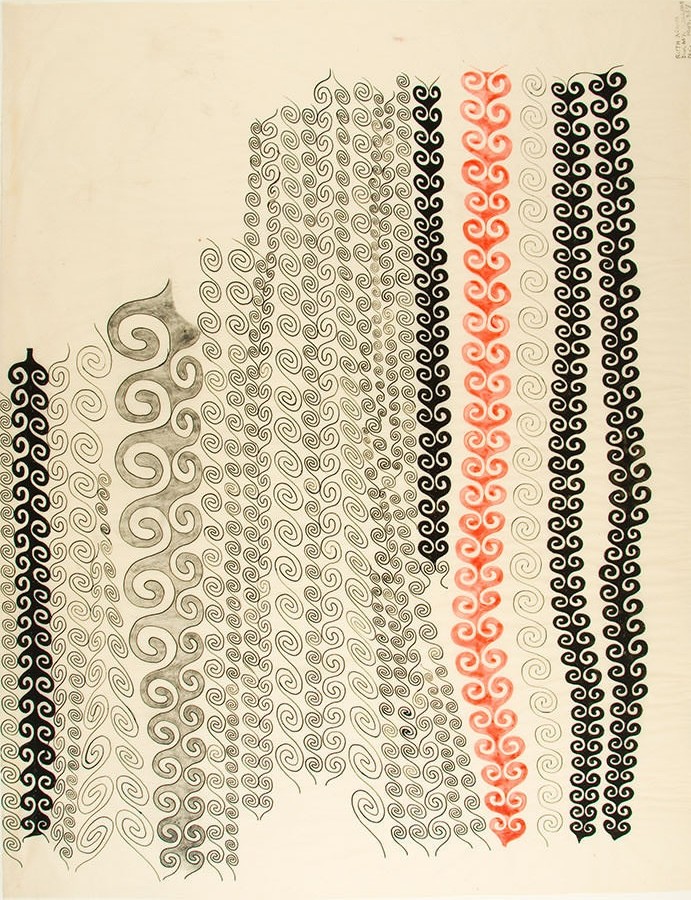
LEFT Ruth Asawa. Date unknown.
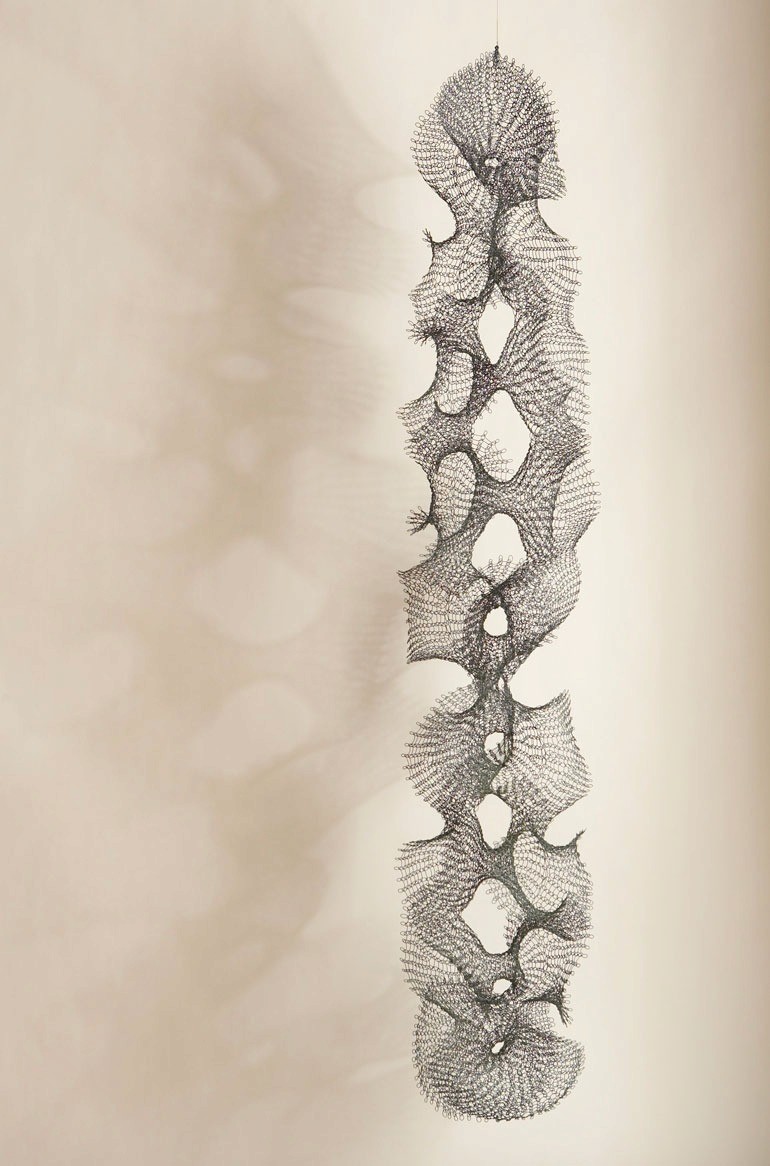
III.
BELOW Untitled (S.433, Hanging Nine Open Hyperbolic Shapes Joined Laterally). c. I958. Copper wire. Photography by Hudson Cuneo and courtesy of the Estate of Ruth Asawa and David Zwirner, New York/ London/Hong Kong.
IV.
LAST Untitled (S.077, Hanging Miniature Seven-Lobed Continuous Form Within a Form). c. I978. Copper wire. Photography by Hudson Cuneo and courtesy of the Estate of Ruth Asawa.
Close Up: Ruth Asawa
Visual Studies 05
Ruth Asawa (I926-2013) created hanging, looped-wire sculptures that are transparent and weightless, often resembling organic or geometric forms.

mohair
The mohair blanket is a soft, voluminous blanket with a welcoming tactility, hand-woven using the finest mohair with added wool for greater body and increased longevity. Our Artisans follow centuries-old tradition working the Angora fibres into superlatively soft blankets. Smooth and lustrous in texture, each is breathable and lightweight, crease - resistant and kind to sensitive skin.
As a naturally renewable resource needing no chemical treatment, mohair goes gently on the earth in its production while providing strength and resilience when spun into yarn.
newsletter
mohair
The mohair blanket is a soft, voluminous blanket with a welcoming tactility, hand-woven using the finest mohair with added wool for greater body and increased longevity. Our Artisans follow centuries-old tradition working the Angora fibres into superlatively soft blankets. Smooth and lustrous in texture, each is breathable and lightweight, crease - resistant and kind to sensitive skin.
As a naturally renewable resource needing no chemical treatment, mohair goes gently on the earth in its production while providing strength and resilience when spun into yarn.
newsletter
mohair
The mohair blanket is a soft, voluminous blanket with a welcoming tactility, hand-woven using the finest mohair with added wool for greater body and increased longevity. Our Artisans follow centuries-old tradition working the Angora fibres into superlatively soft blankets. Smooth and lustrous in texture, each is breathable and lightweight, crease - resistant and kind to sensitive skin.
As a naturally renewable resource needing no chemical treatment, mohair goes gently on the earth in its production while providing strength and resilience when spun into yarn.
newsletter
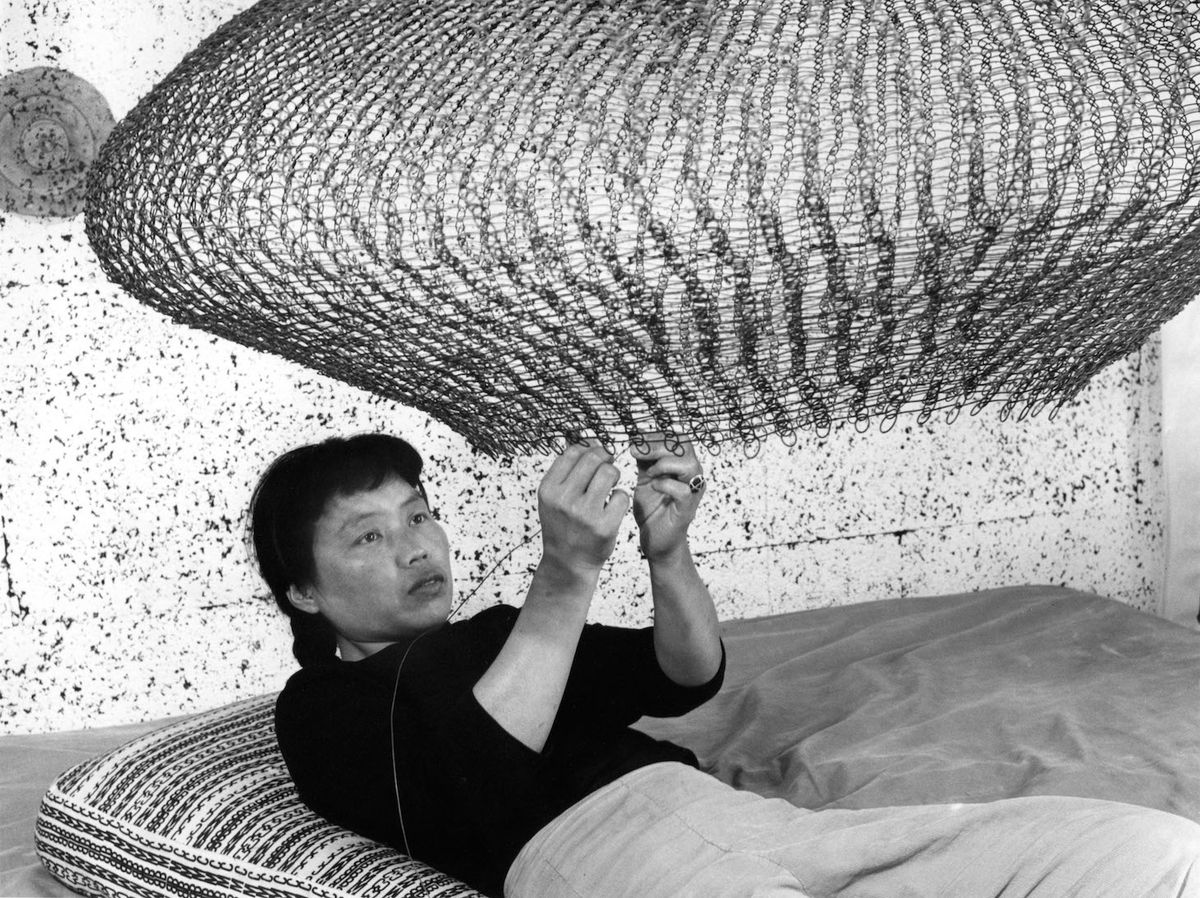
Each piece is made through a single repeated action. One loop drawn through the next, until the form is slowly made. The work is formed from a single continuous line built by hand, without welding or cutting, it remains unbroken from beginning to end.

ABOVE, Ruth Asawa with hanging sculpture, 1952. Photography by Imogen Cunningham / Imogen
Cunningham Trust. Artwork courtesy of the Estate of Ruth Asawa. Photography courtesy of David Zwirner,
New York/London.
Inspired by basket-weaving techniques learned during her time in Mexico, she worked with continuous lengths of wire, shaping them by hand into open structures. Using copper, brass, or iron, she transformed industrial materials into something light and precise, exploring the space between inside and out.
Each piece is made through a single repeated action. One loop drawn through the next, until
the form is slowly made. The work is formed from a single continuous line built by hand, without welding or cutting, it remains unbroken from beginning to end.
Close Up:
Ruth Asawa
Visual Studies 05
Ruth Asawa (I926-2013) created hanging, looped-wire sculptures that are transparent and weightless, often resembling organic or geometric forms.

V. ABOVE Ruth Asawa and her children at home on Saturn Street, San Francisco, 1957, Photograph by Imogen Cunningham.
Close Up: Ruth Asawa
Visual Studies 05
Ruth Asawa (I926-2013) created hanging, looped-wire sculptures that are transparent and weightless, often resembling organic or geometric.
Ruth Asawa (I926-2013) created hanging, looped-wire sculptures that are transparent and weightless, often resembling organic or geometric forms.
ABOVE, Ruth Asawa with hanging sculpture, 1952. Photography by Imogen Cunningham / Imogen
Cunningham Trust. Artwork courtesy of the Estate of Ruth Asawa. Photography courtesy of David Zwirner,
New York/London.
Inspired by basket-weaving techniques learned during her time in Mexico, she worked with continuous lengths of wire, shaping them by hand into open structures. Using copper, brass, or iron, she transformed industrial materials into something light and precise, exploring the space between inside and out.
II.
LEFT Ruth Asawa. Date unknown.
III.
BELOW Untitled (S.433, Hanging Nine Open Hyperbolic Shapes Joined Laterally). c. I958. Copper wire. Photography by Hudson Cuneo and courtesy of the Estate of Ruth Asawa and David Zwirner, New York/ London/Hong Kong.
IV.
LAST Untitled (S.077, Hanging Miniature Seven-Lobed Continuous Form Within a Form). c. I978. Copper wire. Photography by Hudson Cuneo and courtesy of the Estate of Ruth Asawa.
Each piece is made through a single repeated action. One loop drawn through the next, until the form is slowly made. The work is formed from a single continuous line built by hand, without welding or cutting, it remains unbroken from beginning to end.
V. ABOVE Ruth Asawa and her children at home on Saturn Street, San Francisco, 1957, Photograph by Imogen Cunningham.
VI.
RIGHT Ruth Asawa. Date unknown.
VII.
BELOW Untitled (S.433, Hanging Nine Open Hyperbolic Shapes Joined Laterally). c. 1958. Cooper wire. Photography by Hudson Cuneo and courtesy of the Estate of Ruth Asawa and David Zwirner, NewYork/
London/Hong Kong.
Inspired by basket-weaving techniques learned during her time in Mexico, she worked with continuous lengths of wire, shaping them by hand into open structures. Using copper, brass, or iron, she transformed industrial materials into something light and precise, exploring the space between inside and out.
ABOVE, Ruth Asawa with hanging sculpture, 1952. Photography by Imogen Cunningham / Imogen
Cunningham Trust. Artwork courtesy of the Estate of Ruth Asawa. Photography courtesy of David Zwirner,
New York/London.
II.
LEFT Ruth Asawa. Date unknown.
III.
BELOW Untitled (S.433, Hanging Nine Open Hyperbolic Shapes Joined Laterally). c. I958. Copper wire.
Photography by Hudson Cuneo and courtesy of the Estate of Ruth Asawa and David Zwirner, New York/ London/Hong Kong.
IV.
LAST Untitled (S.077, Hanging Miniature Seven-Lobed Continuous Form Within a Form). c. I978. Copper wire. Photography by Hudson Cuneo and courtesy of the Estate of Ruth Asawa.
V. ABOVE Ruth Asawa and her children at home on Saturn Street, San Francisco, 1957, Photograph by Imogen Cunningham.
Each piece is made through a single repeated action. One loop drawn through the next, until the form is slowly made. The work is formed from a single continuous line built by hand, without welding or cutting, it remains unbroken from beginning to end.
VI.
RIGHT Ruth Asawa. Date unknown.
VII.
BELOW Untitled (S.433, Hanging Nine Open Hyperbolic Shapes Joined Laterally). c. 1958. Cooper wire. Photography by Hudson Cuneo and courtesy of the Estate of Ruth Asawa and David Zwirner, NewYork/
London/Hong Kong.
ABOVE, Ruth Asawa with hanging sculpture, 1952. Photography by Imogen Cunningham / Imogen
Cunningham Trust. Artwork courtesy of the Estate of Ruth Asawa. Photography courtesy of David Zwirner,
New York/London.
VI.
RIGHT Ruth Asawa. Date unknown.
VII.
BELOW Untitled (S.433, Hanging Nine Open Hyperbolic Shapes Joined Laterally). c. 1958. Cooper wire. Photography by Hudson Cuneo and courtesy of the Estate of Ruth Asawa and David Zwirner, NewYork/
London/Hong Kong.
V. ABOVE Ruth Asawa and her children at home on Saturn Street, San Francisco, 1957, Photograph by Imogen Cunningham.
Inspired by basket-weaving techniques learned during her time in Mexico, she worked with continuous lengths of wire, shaping them by hand into open structures. Using copper, brass, or iron, she transformed industrial materials into something light and precise, exploring the space between inside and out.
II.
LEFT Ruth Asawa. Date unknown.
III.
BELOW Untitled (S.433, Hanging Nine Open Hyperbolic Shapes Joined Laterally). c. I958. Copper wire.
Photography by Hudson Cuneo and courtesy of the Estate of Ruth Asawa and David Zwirner, New York/ London/Hong Kong.
IV.
LAST Untitled (S.077, Hanging Miniature Seven-Lobed Continuous Form Within a Form). c. I978. Copper wire. Photography by Hudson Cuneo and courtesy of the Estate of Ruth Asawa.